
Here is the lie reps tell themselves: "That lead went cold." As if the lead caught a chill on its own. As if it had nothing to do with you. Leads do not go cold. Reps go quiet.
The importance of follow-up in sales is the least sexy truth in this business, which is exactly why so few people do it. Everybody wants the closing tricks. Almost nobody wants to make the fifth call to a prospect who did not answer the first four. So they don't, and then they blame the lead. Let me show you the math, because once you see it you cannot un-see it.
A lead raised a hand. They filled out a form, took a call, or asked a question. That is interest, and interest does not evaporate in 48 hours. What happens is the rep sends one email, gets no reply, and moves on to the next shiny lead.
The prospect is not sitting there refreshing their inbox waiting for you. They are busy. They forgot. Your one touch got buried under 200 other emails and a fire at work. That is not a dead lead. That is a lead you stopped calling.
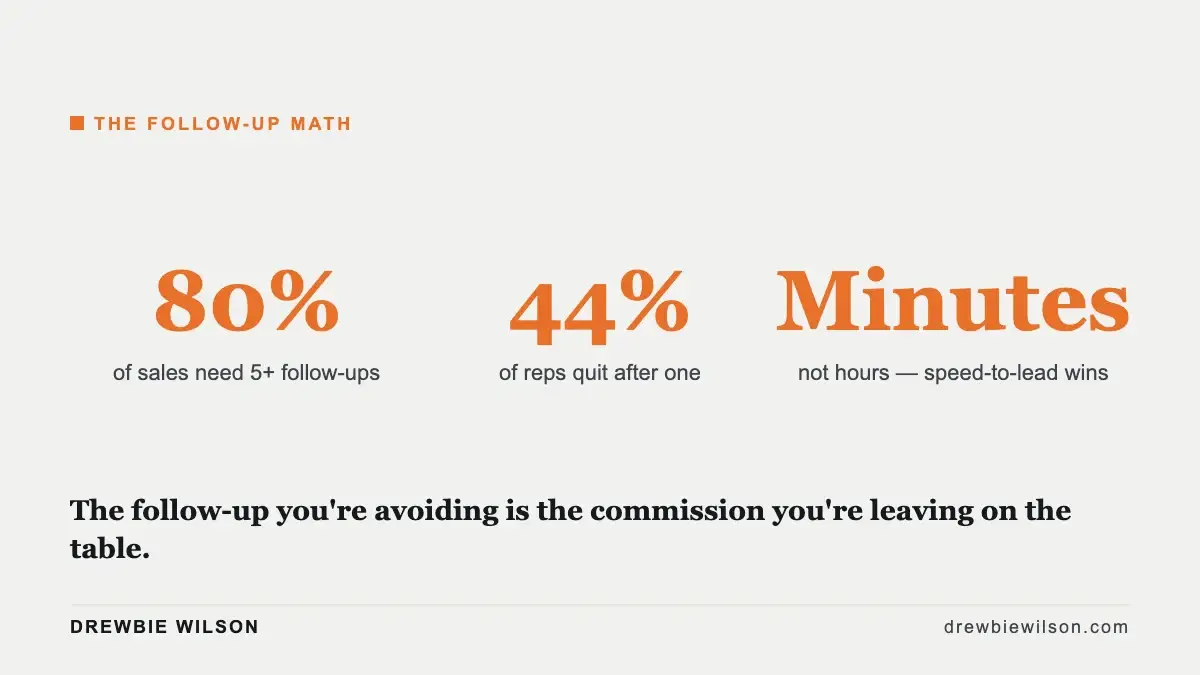
The numbers are brutal and they have not changed in years. Most B2B sales take five or more follow-ups after the first meeting to close. Yet nearly half of salespeople give up after a single follow-up. If the sale lives on touch five and you quit on touch one, you handed the deal to whoever kept going.
Speed makes it worse. Research on lead response shows reaching out within the first few minutes of a lead coming in dramatically raises your odds of a real conversation, and those odds fall off a cliff after the first hour. Wait a day and you are basically calling a stranger who forgot they ever heard of you.
If following up is this obvious, why does almost nobody do it? Three reasons, and they are all in your head, not the prospect's.
A cadence is just a plan for how and when you reach out, so you are not deciding "should I bug them?" every time. The plan decides. You just execute.
The rule that changes everything: every lead gets a real answer. Yes or no, not silence. That is the whole idea behind follow-up system training that turns scattered check-ins into a repeatable system.
The reason most follow-up feels sleazy is that it is empty. "Just checking in." "Bumping this up." That is not follow-up, that is begging. Every touch should give the prospect a reason to care: a relevant case, a quick answer to the objection you know is coming, a useful idea they can use whether they buy or not.
This is where skill meets discipline. The discipline gets you to make the call. The skill makes the call worth answering. To sharpen the conversation itself, the C.A.L.L.S. framework is built for exactly that, and 1:1 sales coaching is how reps make it a habit instead of a good intention.
Cold leads are usually a symptom, not the disease. To find every place your pipeline springs a leak, walk through this step-by-step sales process audit and score your follow-up stage honestly. Most teams can finish it in an afternoon.
Leads also go cold because the rep simply ran out of hours. If your follow-up keeps slipping to tomorrow, look at the daily call volume the math supports.
Once the follow-up habit is set, managers can confirm it with a weekly sales manager CRM activity audit instead of relying on a rep's word.
Bring Drewbie in to build a follow-up system your team actually runs.
Work With Drewbie