
Search for sales training topics and you get a menu: prospecting, negotiation, emotional intelligence, product knowledge, social selling, eleven more. Every item on it is real. None of those lists tells you which one your team needs first, and that is the only decision that matters when you have a limited number of training days and a quarter to hit.
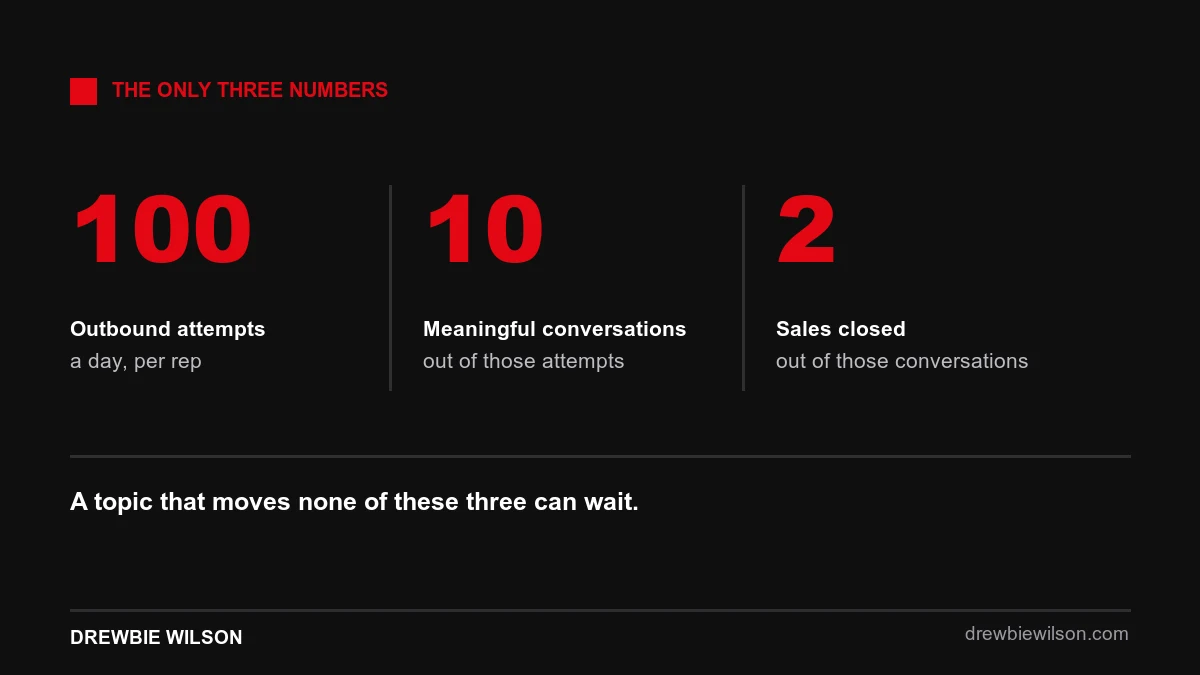
I use one rule to sort every topic, and it comes straight from the 100/10/2 daily standard: 100 outbound attempts, 10 meaningful conversations, 2 sales closed. Every topic worth training moves one of those three numbers. Here are the sales training topics I would put on any team's list, grouped by the number they move, plus what to cut and how to pick the first one.
A sales team produces results through a simple chain. Reps make attempts, some attempts turn into conversations, and some conversations turn into closed deals. When results are short, one link in that chain is weak. Training that works on a different link feels productive and changes nothing.
So before you pick a single topic, pull three numbers for the last 30 days, per rep: attempts, conversations and closes. The first number that is short is where your training budget goes. That one step does more for a training plan than any list of topics, including this one.
These come first because nothing downstream works without them. A rep making a handful of calls a day cannot be coached into a great closer, because there is not enough activity to learn from.
Once attempts are there, the next question is how many of them turn into a real exchange. This is the front half of the C.A.L.L.S. framework: Confirm the reason you are speaking, Ask, and Listen and take CRM notes.
This is the back half of the sale, and it is where most teams spend their training money whether or not it is their weak link. Closing topics feel like the money topics, so they get booked first. If your conversation numbers are healthy and deals still die in the middle, this is the right place to be.
Here is the whole list in one place. Use the third column to decide, before the training starts, how you will know it worked.
| Topic | Number it moves | How to measure it 30 days later | Who needs it most |
|---|---|---|---|
| Daily activity floor | Attempts | Attempts per rep per day, week over week | SDRs and new reps |
| Call reluctance | Attempts | Calls made in the first two hours of the day | Any rep who is behind on activity |
| Lead response speed | Attempts | Time from new lead to first touch | Inbound reps and their managers |
| Openers | Conversations | Conversations per 100 attempts | SDRs |
| Discovery questions | Conversations | Deals with a named problem and cost in the CRM | AEs |
| Listening and CRM notes | Conversations | Share of calls with the buyer's own words logged | Everyone |
| The next-step ask | Closes | Share of calls that end with a booked next meeting | AEs |
| Stalls and objections | Closes | Deals stuck in the same stage for 30 days or more | AEs and senior reps |
| Follow-up cadence | Closes | Average touches before a deal is marked lost | Everyone |
Some training days feel full and change nothing. Three topics show up on a lot of agendas and rarely earn the time:
Go back to the three numbers you pulled. Then work down the chain in order:
Then run the topic like a 30-day project, not a one-day event:
One topic at a time, measured at 30 days, then the next. A team that trains one topic well each month will outsell a team that sat through twelve topics in a two-day offsite.
The honest take. The topic list matters less than the manager. If nobody inspects the numbers every week, any topic fades within a month, however good the training day was. Gallup's research on engagement finds that managers drive 70% of the variance in team engagement, and in sales that shows up as whether a trained habit survives. That is why sales leadership training for frontline managers belongs in the plan alongside the rep topics.
Once you know which number is short and which sales training topics move it, the rest is delivery. That is what Drewbie's sales team training is built around: pick the weak number, train the topics that move it, and inspect the result 30 days later. If you are planning a single session for an event instead of an ongoing program, sales keynote topics is the better place to start.
Send me your last 30 days of attempts, conversations and closes. I will tell you which topic to train first and what it should change.
Get sales team trainingSources: Gallup, How to Improve Employee Engagement in the Workplace · Call The Damn Leads, the 100/10/2 outbound sales standard · Call The Damn Leads, the C.A.L.L.S. framework